Tulip and Daisy Garden Embroidery: A Designer's Review
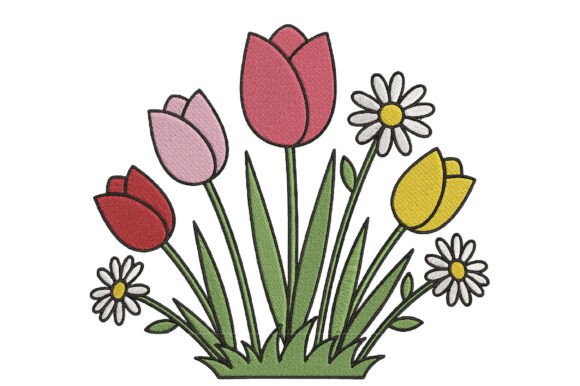
As an embroidery designer who has stitched out countless floral motifs for both personal enjoyment and client commissions, I approach every new machine embroidery design with a critical eye. It is not enough for a digital file to look pretty on a screen; it must perform under the needle. When evaluating the Tulip and Daisy Garden Embroidery, my first impression was one of balanced optimism. The arrangement captures a specific mood that sits comfortably between vintage charm and modern freshness. Unlike overly dense botanical illustrations that can feel stiff, this design breathes. The interplay between the bold structure of tulips and the airy delicacy of daisies creates a visual rhythm that translates beautifully into thread.
For those of us in the craft business or managing an Etsy shop, versatility is currency. This design does not scream "seasonal" in a limiting way; rather, it suggests perennial growth. As part of the broader Floral Wreaths category, it avoids the circular rigidity often associated with traditional wreath designs. Instead, the organic flow allows it to function as a standalone centerpiece or a complementary accent. Whether you are creating custom apparel or home decor, the layout respects negative space, which is crucial for preventing that dreaded bulletproof patch effect on lighter garments.
Real-World Application: Stitching a Spring Tote Bag
To truly understand the value of this embroidery file, I mentally mapped it onto a current project: a natural canvas tote bag intended for a spring boutique collection. Canvas is a forgiving but textured substrate, and the Tulip and Daisy Garden Embroidery proved to be an excellent candidate for this application. In a real-life scenario, the lush greener foliage acts as a necessary anchor against the unbleached fabric, while the vibrant tulips provide the focal point that catches a customer’s eye from a distance.
When stitching this as a tote bag design, the transition between stitch types matters immensely. I observed that the design likely utilizes a combination of satin stitch for the delicate daisy petals and fill stitch for the broader tulip surfaces. This variation is vital for texture. If the entire design were flat fill, it would lack dimension on canvas. If it were all satin, the registration risks on a non-stretchy but thick fabric would be too high. For my hypothetical tote, I would pair this with a medium-weight cutaway stabilizer to maintain crisp edges without adding unnecessary bulk that makes the bag difficult to fold. The result is a handmade product that feels intentional and professionally executed, directly influencing perceived value and buyer engagement.
Performance Across Different Substrates
Beyond bags, this design shows strong potential for various embroidery projects. However, performance varies by material. Here is how I evaluate its adaptability:
- Sweatshirt Embroidery: Fleece and french terry are popular for Etsy sellers, but they are prone to push-pull distortion. The open nature of this garden motif is advantageous here. Because it isn't a solid block of ink-like stitches, it moves better with the garment. I recommend testing on scrap fleece first to ensure the stitch density doesn't cause tunneling.
- Baby Embroidery: For onesies and bibs, softness is non-negotiable. While the Tulip and Daisy Garden Embroidery is cheerful and appropriate for nursery themes, you must verify the backing method. A tear-away stabilizer alone might leave scratchy residue. Using a fusible mesh or water-soluble topping ensures the finished product remains gentle against sensitive skin.
- Kitchen Linens: Tea towels and aprons face frequent washing. The lush greens and vibrant florals must hold up to laundering. Ensure your thread colors are colorfast polyester or rayon. Cotton threads may offer a matte, heirloom look but can fade faster. This design’s balance of detail and coverage means it won’t disintegrate after ten wash cycles, provided proper stabilization was used during hooping.
Navigating Technical Constraints and Fabric Choices
No design is universal, and professional judgment requires knowing where not to use a file. While Tulip and Daisy Garden Embroidery is versatile, caution is required in specific contexts. Small hoop sizes (such as 4x4) may force a reduction that compromises the intricate details of the daisy centers or the definition of the leaf veins. Always check the minimum recommended size before resizing; shrinking floral elements too aggressively results in thread breaks and lost artistry.
Fabric texture also dictates success. On highly textured fabrics like boucle or minky, the fine running stitch details defining the stems may get swallowed. In these cases, the design might need a heavier outline or a different placement strategy. Conversely, on very thin or sheer fabrics, the density of the tulip fills could cause puckering or tearing. Dark fabrics present another challenge; unless the design includes a white underlay or is specifically digitized for dark backgrounds, the vibrant colors may appear muddy or sink into the weave. Always run a contrast test if you plan to use this on navy or black garments.
Commercial Viability and Brand Consistency
For small shop products and commercial embroidery ventures, consistency builds trust. This design possesses a distinct personality that aligns well with cottagecore, garden party, and sustainable living aesthetics. When listing items online, using a printable mockup that accurately represents the stitch texture helps manage customer expectations. Digital previews should never look like flat vector art; they must convey the tactile reality of the digital embroidery file.
If you are selling personalized gifts or wedding items, this floral arrangement serves as a beautiful frame for monograms. However, ensure there is adequate clearance within the wreath shape for custom text. Crowding the lettering against the flowers diminishes readability and elegance. From a business perspective, always confirm licensing terms before incorporating this into design assets for sale or mass production. Protecting your business means respecting intellectual property just as much as protecting your stitch quality.
Essential Pre-Stitch Checklist for Makers
Before committing this design to a final custom apparel piece or inventory item, run through this practical checklist:
- Verify Specifications: Check the exact stitch count, dimensions, and format compatibility. Do not assume standard sizing.
- Test on Scrap: Use the exact fabric and stabilizer combination intended for the final project. Evaluate tension and registration.
- Color Audit: View the design in grayscale to check value contrast. Ensure the tulips pop against the greenery even without color reliance.
- Stabilizer Match: Confirm you have the correct weight and type. Cutaway for stretch, tear-away for stable wovens, and wash-away for sheers.
- Mockup Validation: Create a realistic preview for listings. Avoid over-editing that misrepresents the embroidered patch or direct stitch appearance.
- Licensing Review: Double-check permissions for commercial use, especially if modifying the design or bundling it with other assets.
The Tulip and Daisy Garden Embroidery offers a delightful blend of artistic appeal and functional adaptability. It is a design that invites creativity while demanding respect for technical fundamentals. By approaching it with the mindset of a maker rather than just a consumer, you elevate your work from simple decoration to professional craftsmanship. Whether adorning a holiday gift, enhancing a boutique collection, or serving as a signature element in your handmade product line, this floral arrangement holds its own when treated with proper preparation and thoughtful application. Trust your machine, test your variables, and let the stitching speak for itself.